
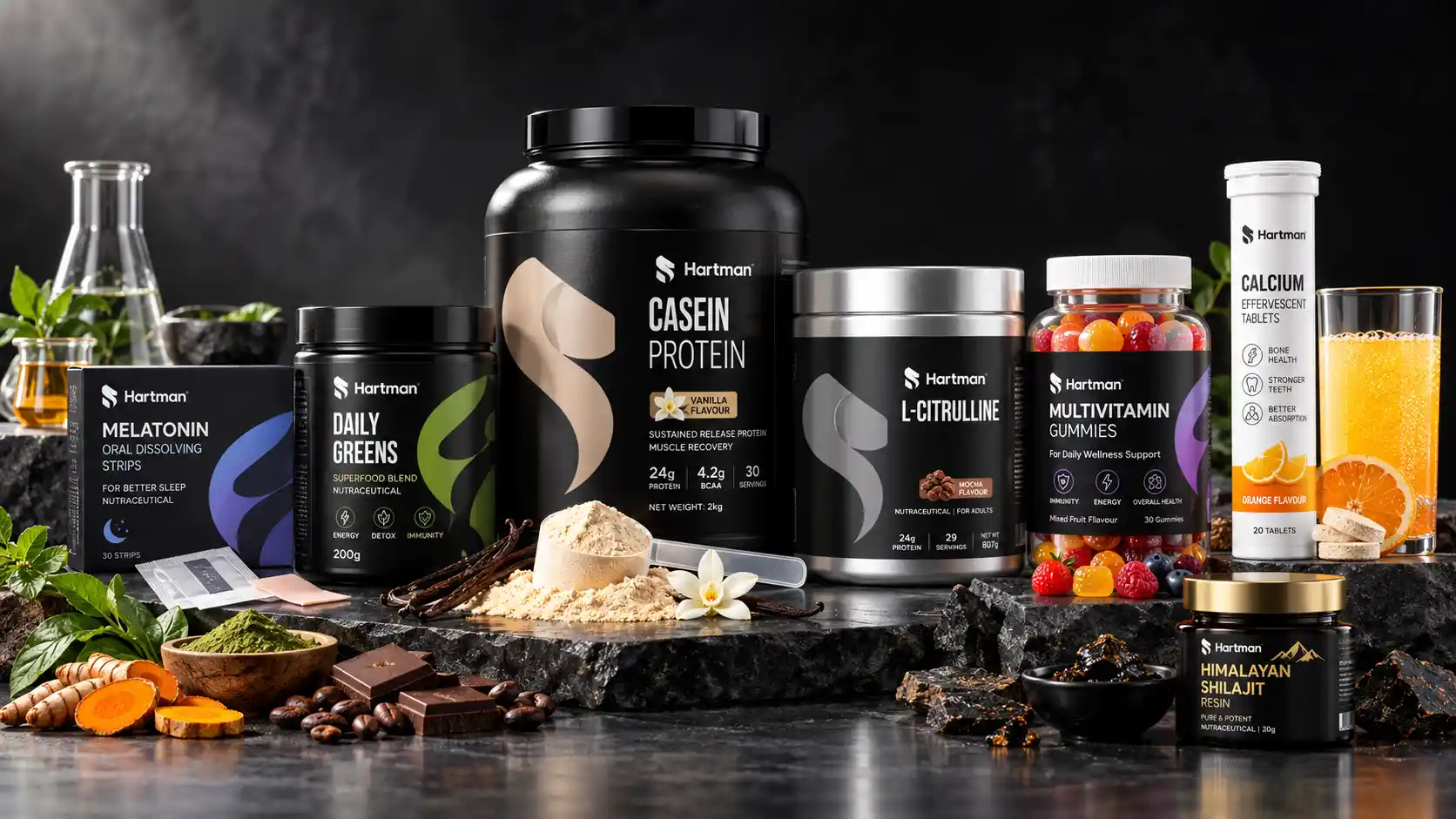
Here’s something most founders learn the hard way: the tub on the shelf is maybe ten percent of the story. The rest? Months of lab trials, taste tests that go nowhere, heated spreadsheet debates, and that one sample which looked great on Monday and was basically soup by Friday. None of it shows up on the label. All of it decides whether you get a second order.
So if you’re launching a range, or moving to a new manufacturer, it’s worth understanding nutraceutical product development from the inside. You’ll ask better questions, you’ll read quotes with sharper eyes, and you won’t be shocked when someone says “stability data” in a meeting. Ready? Let’s follow one product from a rough idea to a sealed carton.
Brief First, Formula Second
Before a single gram gets weighed, the team has to know who this is for. A college athlete in Pune, a working parent in Lucknow and a retired teacher in Jaipur want very different things from a supplement, and the label claims you’re allowed to make under FSSAI rules shape the rest. Skip this conversation and the lab will happily guess for you, then bill you for the guessing.
Then comes nutraceutical product formulation, where scientists choose the actives, settle on doses that actually make sense and pick a delivery form that won’t clash with everything else in the mix. Herbal supplements make this part more interesting, since the root, leaf or seed of a plant can behave differently, and the way it’s extracted changes the outcome again. Taste and absorption are also determined here, yes even already, since any alterations after launch will most likely be a clean slate experience.
A good brief includes several things, and quite frankly, the more of these that you can determine, the less you’ll receive unwanted invoices in the mail:
- Who buys it and what they expect to notice after a few weeks of use.
- The actives and doses you’re picturing, plus any claims you hope to print.
- Whether you want a gummy, a capsule, a strip or a scoop, and what flavour feels right.
- A rough budget with a first batch size and a launch month that isn’t a fantasy.
- Any wishes around eco-friendly materials or sustainable sourcing.
Gummies, Softgels and the Format Debate
Picking a format feels a bit like casting an actor. Some people want a quick capsule they can swallow and forget, while others only stay consistent if the product feels like a treat.
Gummy supplements are the crowd favourite because people genuinely remember to take them, though behind the scenes they’re fussy: pectin, sugar and the active load have to sit in a careful balance or the texture ends up rubbery, sticky, or somehow both. Softgel supplements make more sense when your active is an oil or fat-soluble nutrient, since the sealed shell keeps air away from it and helps it last.
If you’re still undecided, this rough guide might save you a few calls:
- Gummies suit daily wellness ranges and anything aimed at kids or first-time supplement users.
- Softgels fit oils and fat-soluble nutrients that dislike oxygen.
- Oral strips are great for people who can’t be bothered with water.
- Effervescent tablets add fizz and a bit of fun to the routine.
- Chewing gums are still unusual enough to catch a buyer’s eye.
Whatever you choose, ask whether your customer will still be taking it in month three. That question beats most trend reports.
Powders, Protein and the Taste Problem
Powders never get the spotlight. Still, they quietly do a big chunk of the work in this category: powder supplements carry bigger doses, mix easily into a glass of water or a shake, and leave loads of room to experiment with flavour.
Protein supplements are where the challenges show up fast. A clumpy shake gets one bad review and no second chance. Whey, plant blends and mixed proteins all have to dissolve smoothly, taste decent and fill sachets evenly, and that last part depends on how freely the powder flows, which many first-time founders only discover once a filling line starts jamming. Get two or three flavour samples and hand them to friends who’ll be brutally honest, because your own taste buds stopped being objective about this formula weeks ago.
The Sample Round Saves Real Money
Think about what a sample costs next to a full batch. Basically nothing, which is why this is the one stage where you should be annoyingly picky. Taste it. Stir it into a bottle. Forget a sachet in your bag for an afternoon in the heat and see what it looks like later.
Trial runs let the team fix sweetness, colour and dissolve time. Gummy too chewy? Powder lumping up after two humid days? Sorting that out now takes days. After a 50,000-unit run it takes an uncomfortable meeting with your finance person.
How a partner behaves at this stage tells you a lot, so keep an eye out for the following:
- Feedback and revisions that are written down properly instead of floating around in chat threads.
- A clear timeline for each sample round, with someone named as responsible.
- Ingredient and specification sheets that arrive before you’ve had to ask twice.
- Bulk production that starts only after you’ve signed off on the sample in writing.
Once you approve, that sample becomes the benchmark every later batch is compared against.
Life Inside the Production Floor
Okay, now the formula leaves the lab notebook and meets real machines, and things get loud. The supplement manufacturing process runs in a fixed order, and each step gets written down, which means any finished batch can be traced right back to its raw materials.
It’s all held together by Good Manufacturing Practices in supplement production. In layman’s terms: controlled environments, trained staff, calibrated machinery, and a process for almost everything. It’s not glamorous. But it’s why batch 40 behaves like batch 1, and why audits feel routine instead of terrifying.
A typical run passes through a handful of checkpoints, each designed to catch trouble before it travels further down the line:
- Testing of raw materials before they ever enter the plant.
- Weighing and blending according to the approved formula.
- Filling, encapsulation, depositing or tableting, depending on the format you chose.
- In-process checks on weight, texture and how uniform each unit turns out.
- Final testing and a complete batch record that stays on file.
Batch records sound dull, and they are, right up until a customer asks a question a year later and you trace an ingredient to its source in a few minutes.
Stability Testing, or Time Travel for Your Product
Imagine a product that’s flawless on day one and sad by month ten. That’s the exact scenario supplement stability testing exists for, which is why it sits in the middle of the journey and not at the end.
Samples are subjected to different temperatures and humidity in chambers according to ICH guidelines, and sampling is done at periodic intervals for testing potency, moisture, microbiology, appearance, and taste. Gummies get watched for stickiness. Powders for clumps. Softgels for leaks.
What comes out of this decides your expiry date, your storage instructions and, often enough, the packaging you end up with. Skip it and your first honest feedback arrives from unhappy customers rather than a lab report. Not great.
Packaging, the Final Glow-Up
So the product’s done. Now it has to look the part. Effective supplement packaging should ensure that no light, moisture, and oxygen comes into contact with the formula and also has to somehow make you know within just a couple of seconds.
Even the label on the product must meet FSSAI standards; as a result, ingredients, nutritional information, batch number, and expiration date must all be clear.. And sustainability? It’s a first-meeting question now, not a bonus. That’s why Hartman Nutra is building eco-friendly packaging into its range of gummies, oral strips, chewing gums, effervescent tablets, powders and Shilajit.
A few options that protect the product while trimming waste:
- Recyclable pouches and mono-material formats wherever the product allows.
- Right-sized bottles and jars, so you aren’t shipping air and extra plastic.
- Tamper-evident seals and desiccants for formulas that hate moisture.
- Paper cartons and inserts with minimal ink and coating.
- Label designs that work on retail shelves, online listings and export shipments.
Custom Formulas, OEM Muscle, Your Label
Plenty of nutraceutical contract manufacturing companies will make whatever sits on your spec sheet. Hartman Nutra works a little differently, because your brand isn’t a copy-paste job, so we shape the formula, format and finish around what you’re actually trying to build.
Here’s how that looks from first brief to final carton:
- Custom formulations based on your target market and the claims you want to make.
- OEM manufacturing with your own branding, specifications and timelines.
- Private label supplements across gummies, oral strips, chewing gums, effervescent tablets, powders and shilajit.
- Order sizes that suit your launch stage, whether that’s a pilot run or a full rollout.
- Eco-friendly packaging and sustainable sourcing support.
- Quality documents you can actually show a buyer or an auditor.
One team from brief to packing keeps handoffs low and surprises lower. Maybe you want a small pilot batch first. Fine by us. Or a new flavour for a second market? We can do that too. No cookie-cutter plans, only a partner who treats your launch like it’s ours.
Ready to Start Your Own Journey?
Each stage feeds the next, and your brand’s reputation rides on all of them. Rush one and the market notices. Get them right and customers keep coming back.
|
Got an idea waiting to become a shelf-ready product? Talk to Hartman Nutra today, and let’s build it together, smartly and sustainably.
|


