
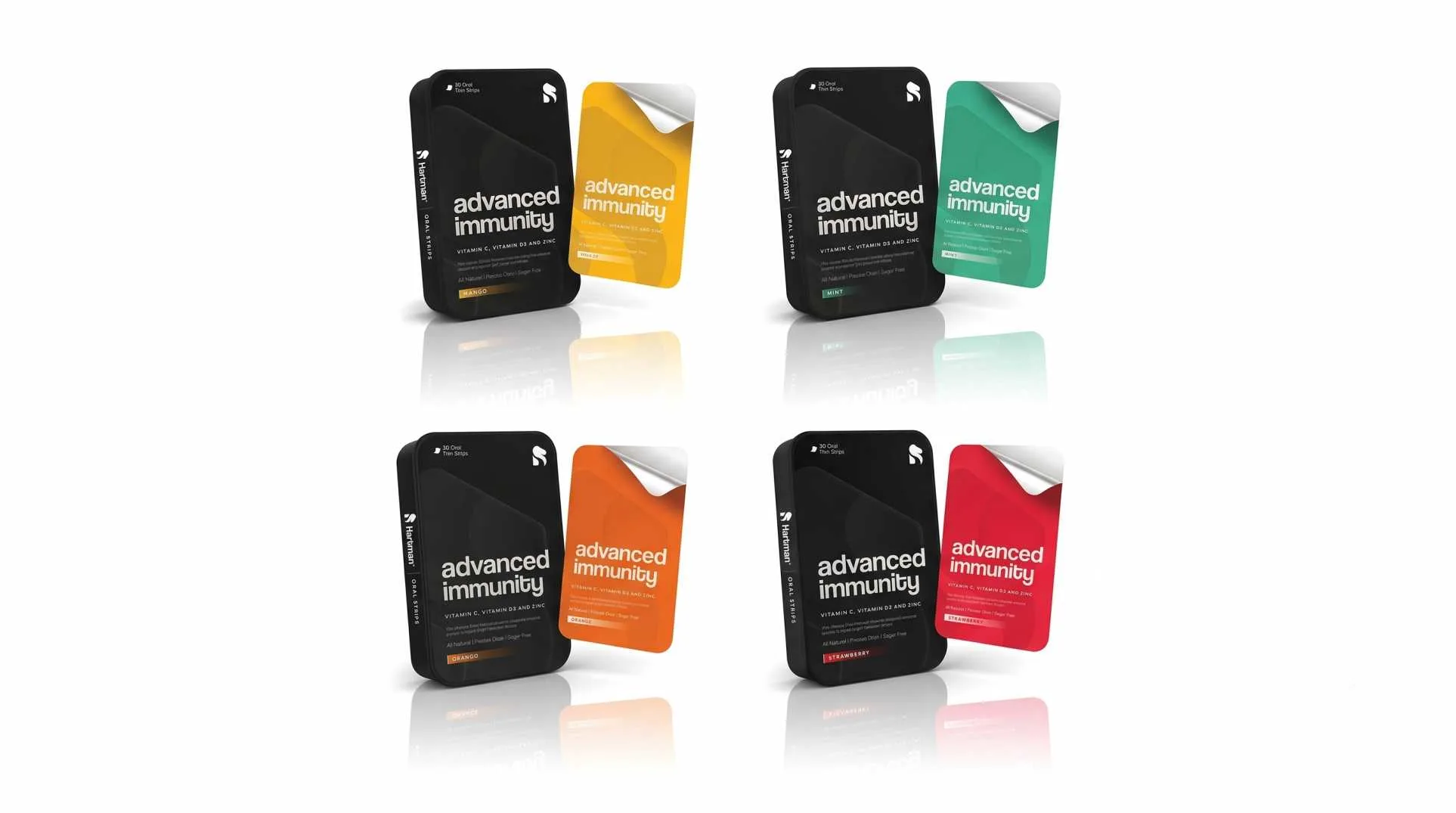
A behind-the-scenes look at how fast dissolving oral films actually get made — and why so many supplement brands are switching over.
What Are Oral Thin Film Strips?
Remember breath strips? Stick one on your tongue and it's gone in seconds. That's more or less the idea behind an oral thin film. Oral thin film strips — sometimes called oral strips, sometimes just oral film — are wafer-thin, flexible sheets that melt away almost the moment they touch your tongue or the inside of your cheek. No water. No swallowing anything. A strip, a few seconds, gone.
Thinner than a postage stamp, usually. But inside that thin little sheet sits a carefully measured dose — vitamins, minerals, sometimes a botanical extract.
And it's not like brands jumped on this just because it's trendy. People are impatient, honestly — a tablet that needs water and ten minutes before it does anything doesn't fit a rushed morning, a cramped gym bag, or a plane seat.
So what actually sets an oral thin film apart? A handful of things:
- Dissolves quickly — often within seconds, sometimes a minute or two depending on the formula
- Barely weighs a thing — slips into a wallet or pocket without anyone noticing
- One strip equals one dose, which cuts down on guesswork
- Flavored, because nobody's lining up for a strip that tastes like chalk
- Fits both everyday supplement routines and more specific products, like vitamin strips built around a single need
How Oral Thin Film Strips Are Made: The Manufacturing Process
Getting a strip to dissolve properly, taste decent, and survive months on a shelf takes more steps than most people would guess. Formulation science on one end, precision engineering on the other. Miss a step, and the batch can fail quality testing.
Step 1: Oral Film Formulation and Ingredient Selection
Every strip starts as a liquid. That means starting with oral film formulation — pick a polymer base, add plasticizers, work in the actives, sweeteners, flavor, and sometimes a bit of color.
- Film-forming polymers — pullulan, hydroxypropyl methylcellulose, modified starches, that sort of thing — are basically the backbone of the strip. They largely decide how fast it dissolves and how strong it holds together
- Plasticizers stop the film from turning brittle or cracking during storage — nobody wants a strip that snaps in half in transit
- Active ingredients need to spread evenly through the mix. Uneven dispersion means uneven dosing, and that's a problem
- Sweeteners and flavor-masking agents cover up the bitterness a lot of actives carry naturally
This takes trial and error. Formulators run batch after batch, tweaking the polymer ratio until the viscosity feels right for casting. Too thin, it tears. Too thick, it dries unevenly.
Step 2: Solvent Casting and Thin Film Casting
Formulation done, the mixture moves into solvent casting — still the go-to method for fast dissolving oral films at scale. The solution gets spread onto a moving carrier web in a thin, even layer.
- Cast at a controlled thickness, usually just a handful of microns
- Thin film casting equipment keeps that spread even across the whole web — get this wrong and doses start varying strip to strip
- Casting speed matters too. Even a slight shift in thickness changes how fast the finished strip dissolves later
Some manufacturers lean on hot-melt extrusion instead, but solvent casting still dominates for oral dissolving strips — tighter control over thinness, more stable ingredients.
Step 3: Drying
Wet film moves through a multi-zone drying oven next. Heat pulls out the solvent — usually water, sometimes a water-alcohol mix — gradually, without wrecking anything heat-sensitive in the formula.
- Drying happens in stages. Temperature and airflow shift at each zone
- Dry it too fast, moisture gets trapped and the surface turns rough. Dry it too slow, and actives start breaking down
- A little residual moisture stays in the film on purpose — keeps it flexible, not brittle
Step 4: Slitting and Cutting
Once dry, the sheet gets sliced into smaller rolls, then die-cut into individual strips — same shape, same size, every time.
- Precision matters here. Every strip needs the exact same surface area, because surface area is what determines dose
- Leftover trim gets collected. A lot of it goes back into the process
- Edges get checked too — ragged cuts don't just look bad, they can throw off how the strip dissolves
Step 5: Quality Testing
Nothing ships without testing first. Every batch goes through a full check before packaging even starts.
- Disintegration testing — how fast does it actually dissolve under conditions that mimic the mouth?
- Content uniformity testing, making sure the active ingredient level doesn't drift from strip to strip
- Thickness and weight checks, which catch casting or cutting mistakes before they become a bigger problem
- Microbial and stability testing, to confirm the shelf-life claim on the box actually holds up
|
FACT Oral film thickness is usually measured in microns. Most commercial strips sit in a pretty narrow range — wide enough to hold the dose, thin enough to dissolve fast. |
Step 6: Packaging
Oral thin films are thin, and thin means sensitive to moisture. So packaging carries more weight here than for most other supplement formats.
- Individual strips often get sealed in foil or laminate pouches, blocking out humidity and light
- Multi-strip packs might use blister cards, or resealable sachets for something more everyday
- The packaging itself needs to open easily, on the go — that's half the appeal of the format in the first place
Why Brands Are Adopting Oral Thin Film Technology
More supplement and nutraceutical brands are building entire lines around fast dissolving films. Why? A few solid reasons.
- No water required. Strips dissolve on the tongue, which just works better for travel, a workout, or a rushed morning
- Onset can be faster, since absorption sometimes starts right in the mouth instead of after swallowing
- Easier for people who struggle with pills — kids, older adults, anyone who's gagged on a capsule knows the appeal
- Dosing stays consistent. Every strip is made to the same size, so there's less guessing involved
- They just stand out more — put a pack of vitamin strips next to yet another bottle of capsules, and guess which one catches your eye first
|
DID YOU KNOW? Some fast dissolving films are gone from the tongue in under 30 seconds, believe it or not. Compare that to a standard tablet, which can take several minutes just to fall apart after swallowing. |
Applications Beyond Vitamins
Vitamin strips get most of the attention, sure. But oral film technology has quietly spread into a lot of other categories:
- Sleep and relaxation strips — melatonin, herbal blends, that kind of thing
- Energy and focus strips built around caffeine or B-vitamins
- Oral care strips, breath fresheners, even whitening formats
- Digestive support formulas
- General immunity and wellness blends
How Oral Films Differ from Conventional Delivery Formats
Numbers aside, how does this format actually stack up against the tablets and capsules everyone already knows? Here's a general side-by-side.
| Attribute | Tablets / Capsules | Oral Thin Films |
|---|---|---|
| Water required | Usually yes | No — dissolves on the tongue |
| Typical onset of action | Several minutes (after digestion) | Seconds to a couple of minutes |
| Ease of swallowing | Can be difficult for some users | Not applicable — no swallowing needed |
| Portability | Bulkier, needs a container | Slim, foil-sealed, pocket-friendly |
| Dosing precision | Fixed by tablet/capsule weight | Fixed by film surface area and thickness |
| Storage sensitivity | Generally more stable | More sensitive to humidity and heat |
| Manufacturing approach | Compression or encapsulation | Formulation, casting, drying, cutting |
| Consumer experience | Familiar, conventional | Novel, convenient, flavor-forward |
|
TRIVIA Dissolvable film strips first went mainstream through breath fresheners, back in the early 2000s — long before anyone thought to put vitamins in them. |
Working With an Oral Thin Film Manufacturer
Here's the thing — most brands can't just start making oral films in-house. Casting lines, drying tunnels, formulation know-how — that's a lot to build from zero. Which is why so many nutraceutical brands go looking for an established oral thin film manufacturer instead.
Hartman Nutra works alongside supplement and nutraceutical brands on private-label oral film projects — from early formulation trials through to a finished, packaged product. Exploring oral thin film technology for the first time? Working with someone who's already sorted out casting parameters, stability testing, and the regulatory maze can save months of trial and error.
Conclusion
Cut through the marketing talk, and an oral thin film strip is really just a tightly run sequence — formulation, solvent casting, drying, cutting, testing, packaging. Skip one, and it shows up fast, usually in a bad way. More people want supplements that skip the water and the ten-minute wait, which is pushing oral films from a neat idea into something genuinely mainstream. Knowing how they're made is a solid starting point for deciding if the format's worth it for your brand.
|
Thinking about an oral thin film product for your brand? Reach out to Hartman Nutra to talk formulation and private-label options. |


