
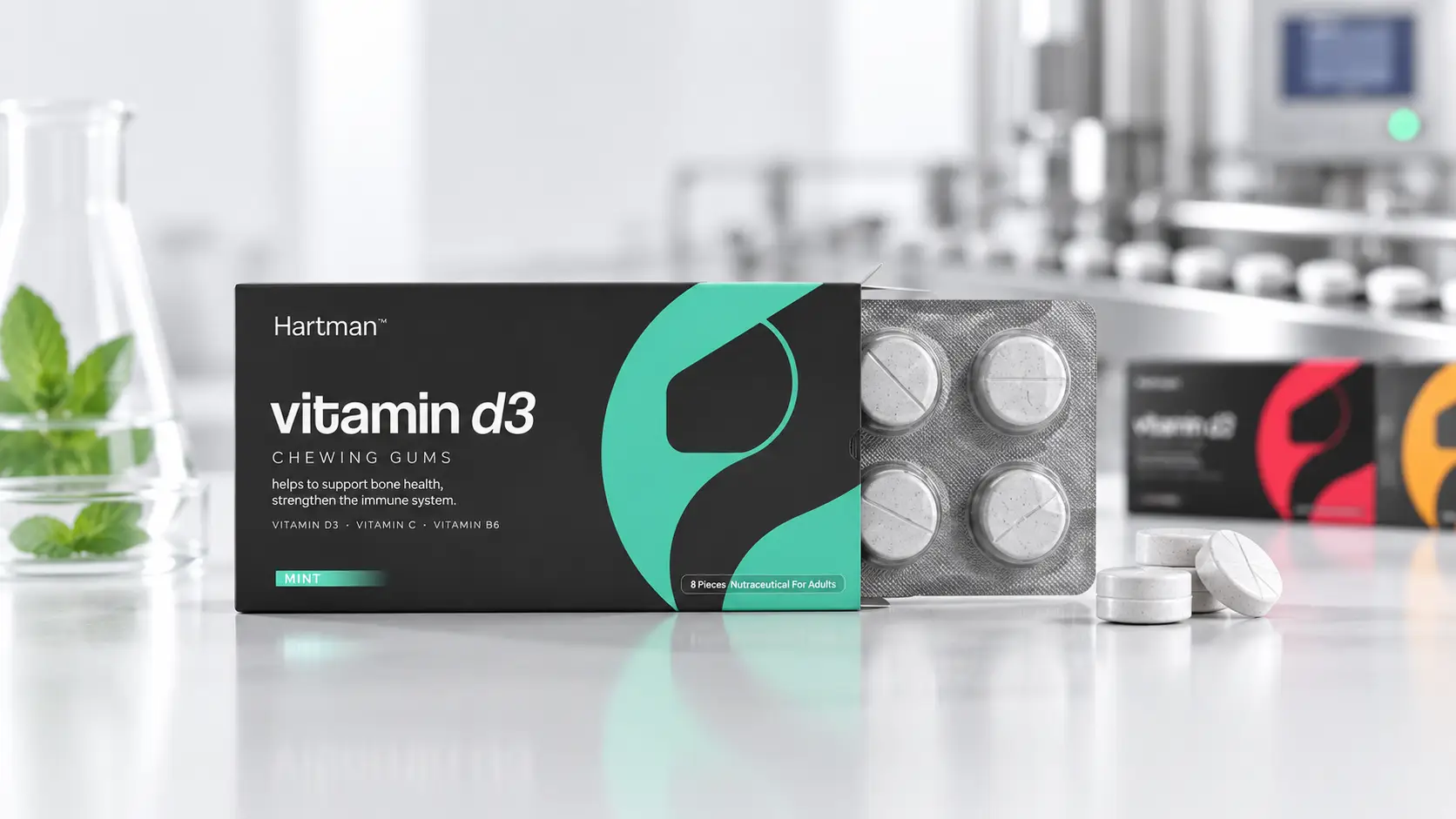
The science, sourcing, and manufacturing standards behind every quality chew
Pop a stick of gum in your mouth and most people never think twice about it. Yet chewing gum has quietly turned into a functional and nutraceutical product — carrying vitamins, energy blends, wellness actives, in something people already reach for out of habit. None of that works if the product itself is weak, though. Taste, texture, whether it actually delivers what it claims — all of it traces back to the chewing gum manufacturer behind it. Pick the wrong one, and no branding saves a chewing gum that crumbles or tastes off. Getting functional chewing gum right starts with that one decision. Hartman Nutraceuticals was built around exactly that decision.C
Why Chewing Gum Is Becoming a Popular Supplement Format
Why does chewing gum keep showing up as a supplement format? Simple — convenience wins. No water, no capsules, no waiting around for something to kick in. Just chew, and you're done. That ease is exactly why chewing gum supplements have taken off among people hunting for something portable to support energy, focus, or just general wellbeing. Taste matters too, maybe more than brands give it credit for — nobody wants to choke down a chalky tablet when a well-made functional chewing gum tastes... actually good.
A few reasons this format isn't slowing down:
- No water or swallowing needed, just chew
- Familiar format — easy to stick with daily
- Portable enough for travel, work, workouts, wherever
- Flavour masks actives that'd otherwise taste rough
What Goes Into High-Quality Chewing Gum?
There's more going on inside a stick of gum than most people assume. Start with the gum base — that's what gives it chew and mouthfeel — then layer in sweeteners, flavour systems, and whatever functional ingredient the product's built around. Nailing that balance takes real chewing gum formulation skill; too much activity and taste suffers, too little and the product just doesn't do what it promises. Sourcing matters just as much — inconsistent chewing gum ingredients mean inconsistent batches, plain and simple. At Hartman Nutraceuticals, this balance is treated as non-negotiable.
The building blocks, generally:
- Gum base, the chew foundation — food-grade and stable
- Sweeteners and flavour systems for taste and masking
- Functional actives: vitamins, botanicals, or energy blends
- Texture modifiers, for softness and a consistent bite
Key Factors That Affect Chewing Gum Quality
Not every gum holds up once it's out in the real world. A handful of factors decide chewing gum quality — and understanding them is what separates guesswork from genuine premium chewing gum development.
Taste and Texture
First impression? Usually taste and chew. Chewing gum tastes wrong — too sweet, too artificial — and people won't buy it again. Chewing gum texture is the other half — can't turn brittle, can't turn gummy-sticky either, soft and pliable every single piece, every pack. Miss that, and customers notice fast.
Ingredient Quality and Formulation
Reliable chewing gum ingredients sourcing keeps every batch behaving the same way, no surprises. But sourcing alone isn't enough. Chewing gum formulation also has to account for how actives interact with the base itself; some ingredients dissolve unevenly, some throw off the flavour entirely if dosage and compatibility aren't tested properly before scaling up.
Stability and Shelf Life
Heat and moisture are the enemy here. Left unchecked, they wreck chewing gum shelf life fast — hardening, stickiness, flavour that just... fades. Real chewing gum stability comes down to formulation choices plus packaging that actually protects against humidity, so the gum tastes the same on day one and month six.
|
Trivia: Humans were chewing something gum-like long before flavoured gum existed — early versions were just tree resin and bark tar. Not exactly minty fresh. |
Popular Types of Functional Chewing Gum
Functional gum today isn't one thing — it splits into several categories, each built around a different need. Knowing the different types of chewing gum helps brands figure out where they actually fit in the wider nutraceutical chewing gum space.
Vitamin and Wellness Chewing Gum
These are built to deliver vitamins and micronutrients without the hassle of swallowing a tablet. Vitamin chewing gum has caught on with people wanting an easy daily wellness habit, while wellness chewing gum tends to stretch further — immunity, digestion, general health, that sort of thing.
Energy and Performance Chewing Gum
Built for people on the move, energy chewing gum usually leans on ingredients meant to support alertness or stamina — think workouts, travel days, long shifts. As a functional gum, it's a quick alternative to drinks or capsules when you need something fast and portable.
Specialized Functional Chewing Gum
Then there's everything else — oral care, breath freshness, niche lifestyle needs. Functional chewing gum in this category zeroes in on one clear benefit rather than trying to do it all. These chewing gum supplements work well for brands wanting something focused, not scattered.
Types of Functional Chewing Gum at a Glance
| Category | Primary Focus | Best Suited For |
|---|---|---|
| Vitamin & Wellness Gum | Micronutrients, immunity, digestion support | Daily wellness routines |
| Energy & Performance Gum | Alertness and stamina support | Active lifestyles, travel, workouts |
| Specialized Functional Gum | Oral care, freshness, niche benefits | Targeted, single-benefit positioning |
|
Did You Know: “Gum base on its own has basically no flavour and next to no calories. Everything you taste — and everything it does — comes from what's blended in during formulation.” |
Why the Right Chewing Gum Manufacturer Matters
Scaling gum production is trickier than it looks from the outside. A solid chewing gum manufacturer brings formulation know-how, quality control, and production consistency — things most brands simply can't replicate on their own. Mixing ingredients is the easy part, honestly. The harder job — the one experienced chewing gum manufacturers actually earn their keep on — is keeping texture stable, making sure actives don't clash, masking off-flavours, all inside whatever regulatory box applies. Hartman Nutraceuticals brings exactly this kind of expertise to every project.
Here's roughly what a good partner brings:
- Formulation know-how across gum bases and actives
- Quality control built into every production stage
- Support for testing, packaging, and scale-up as you grow
- A lot less trial-and-error than going it alone
Get this choice right in chewing gum manufacturing, and everything downstream — quality, consistency, repeat buyers — gets a whole lot easier.
What Brands Should Check Before Manufacturing Chewing Gum
Before signing with anyone, run through these — they matter more than most brands realise for chewing gum manufacturing:
- Manufacturing experience — actual gum expertise, not just general supplements
- Certifications and compliance for your target market
- MOQ flexibility — does it match where your brand actually is right now?
- R&D support that can fix taste or texture issues, not just produce
- Ingredient sourcing that's traceable, batch after batch
- Stability and shelf-life testing before anything ships
- Packaging and scalability, for launch day and for growth
- Regulatory guidance for labelling private label chewing gum
Hartman Nutraceuticals checks every one of these boxes. Skip this step, and you'll likely pay for it later — reformulations, delays, the works.
|
Fact: “A piece of gum gets chewed for roughly 15 to 20 minutes before most people toss it. Formulators actually plan around that window when timing flavour release and active delivery.” |
How Private Label Chewing Gum Helps Brands Launch Faster
Building an in-house gum line? Not practical for most brands. That's where private label chewing gum comes in — a genuinely faster way to market. Pick from existing formulations, tweak what needs tweaking, add your own branding and packaging, and skip the infrastructure headache entirely. Manufacturers offering chewing gum contract manufacturing bring established quality systems with them from day one. Hartman Nutraceuticals is one such manufacturer offering exactly this kind of support. Want something more distinctive? Custom chewing gum development gives you more say over flavour, format, and positioning, without waiting years to build production capability from scratch.
Conclusion
Chewing gum has grown into a serious functional format — and doing it well takes more than a good flavour. Ingredient sourcing, formulation stability, every small detail shapes how the product actually performs. Working with an experienced chewing gum manufacturer hands brands the expertise, systems, and support needed to build a functional chewing gum people actually trust — and to keep that chewing gum consistent as demand grows. Hartman Nutraceuticals brings that experience to every batch.


