
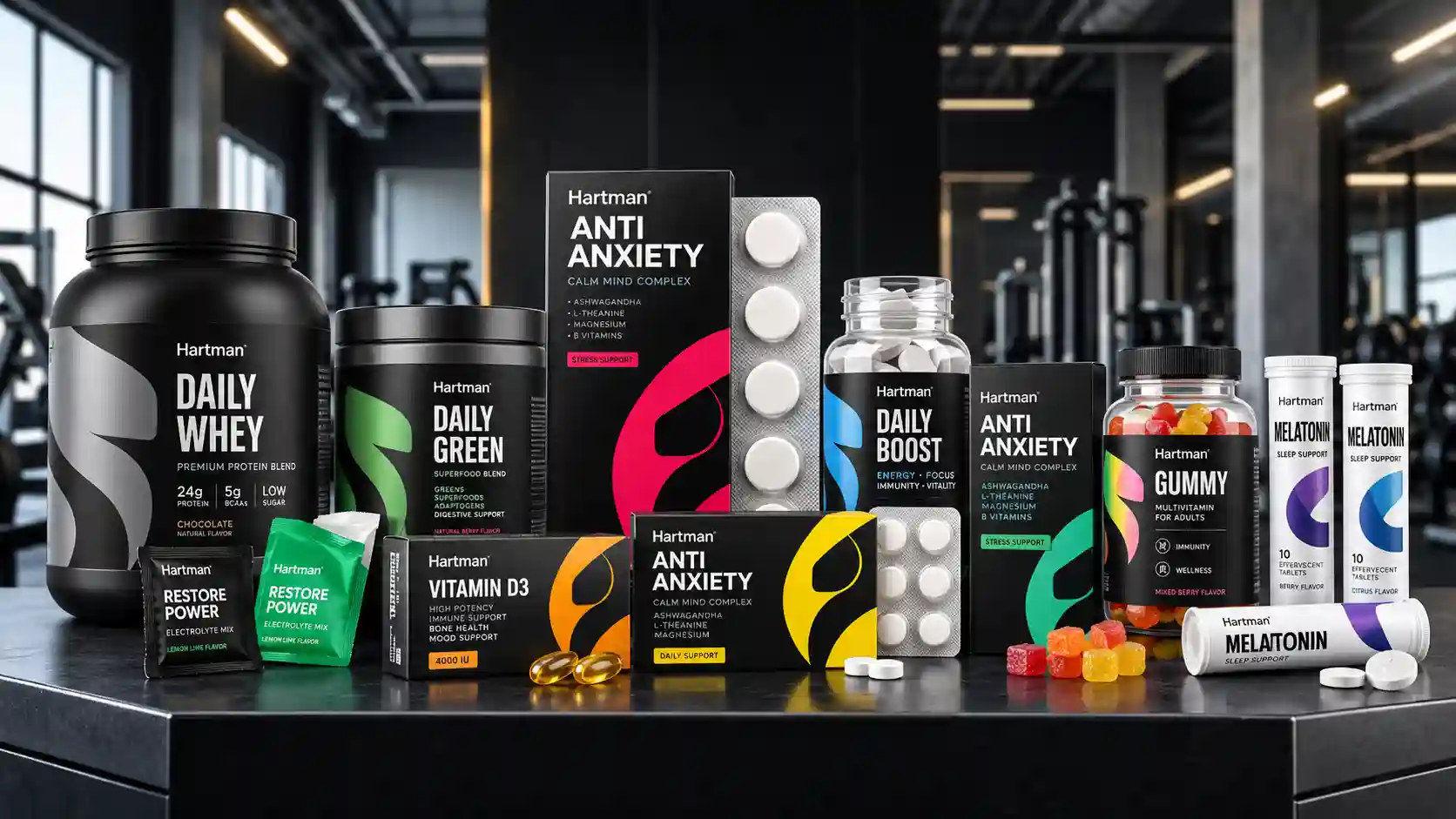
It is not the sole aspect to consider in this case. The properties of the product could be influenced by its dosage, composition, and testing & control during production.
Both of the supplements can have the same ingredients but could differ in terms of flavor, stability, usability, and other aspects. This does not necessarily mean better health effects; the list of ingredients cannot provide all of the product's features.
Some of those can be due to specifications of the raw material used, its portion size, ingredient compatibility, dosage forms and manufacturing control. Understanding of the above aspects will assist brand owners in comparison of their products as well as cooperation with nutraceutical producers.
The Ingredient List Does Not Tell the Whole Story
A name of an ingredient does not give an indication of the total source and specifications. There are variations in materials according to the purity, grades, concentrations, or standards. Brands should examine the documents and compare each material to the product specifications.
Key checks include:
- Source and traceability: Records assist in determining the material and its source.
- Purity and grade: The acceptable material characteristics and impurities are specified.
- Standardisation: It can establish the grade of a chosen constituent of complicated constituents.
- Identity and handling: Checks that are appropriate verify identity and serve to safeguard materials against heat, moisture, and light.
The specifications are based on the ingredient and its use. Better purity is not a guarantee of better product, suitability, stability, compatibility and the product brief are involved.
How Supplement Dosage Influences the Final Product
Dosage of supplement is the amount of a given ingredient to be consumed in a single serving or daily. Two products can have the same ingredient but can indicate varying amounts, serving sizes or units per serving.
Brands should check:
- The quantity of each active ingredient in a serving.
- The quantity involved in the whole ingredient or a specific component.
- Serve instructions and the necessary labelling.
- The ability to create an accurate target quantity in the selected format.
More does not always equate to better. It all depends on what the right amounts are that are derived from the product specification, the ingredient itself, data, and the necessary considerations. The taste, texture, individual unit size, processability, and serving size per pack may also be dictated by the dose, therefore, it is an important factor in the formulation consideration as a whole.
The Role of Formulation in Supplement Performance
Ingredients are mixed into a completed product through a formula. Formulation affects the behavior of material in a combination with other ingredients and the compatibility of materials with the chosen form.
Formulation of dietary supplement manufacturing may involve:
- Interaction of Ingredients- Ingredients may interact between themselves and affect the formulation in its entirety.
- Solubility and Compatibility- Individual behavior of each component depends on the type of product such as powder or any liquid or solid.
- Stability- Such factors as moisture, oxygen, light, temperature and packaging influence the stability of the product.
- Flavor and Mouthfeel- Flavor and mouthfeel are an integral part of consumer experience.
- Formulation Considerations- The formulation must be adapted for mixing, manufacturing, filling and packaging.
The same set of nutrients can be provided in two types – powder and gummies and need various supportive components. For example, structure is needed for gummies, solubility and water resistance are required for powders.
Supplement Absorption and Bioavailability Explained
The absorption of the supplement is the process of passing of a substance as it is administered into the body. Supplement bioavailability refers to the degree and speed at which it is released to the pertinent location or in the bloodstream.
All the substance in a product may not be all that is available to the body. Bioavailability of supplements may be different; the following factors are important:
- The physical characteristics and the chemical structure of the ingredient.
- Its solubility or dispersibility.
- The immediate formula and dosage form.
- Characteristics of release and personal physiological variations.
The format alone should not be ranked as a liquid, tablet, powder, gummy or oral strip. Asymmetries regarding better access must be supported with appropriate evidence; brands should not just promise by form or by the wording of labels.
How the Supplement Manufacturing Process Can Make a Difference
The supplement manufacturing process transforms a given formula and ingredients into a final product. The order is determined by the product type, equipment and specifications.
Typical stages include:
- Raw material inspection: Check documentation, packaging, identity and specifications needed.
- Weighting: Weight components according to the approved formula.
- Mixing: Mix components properly in the batch.
- Format-based: Prepare gummies, format tablets, produce oral strips, mix powders or make effervescent tablets, as applicable.
- In-process tests: Track key parameters of production.
- Evaluation of finished-products: Full checks as specified and as requested.
- Storage and packaging: Store the product in appropriate conditions.
All formats do not travel the same path. Gummies might require controlled heating and deposition; oral strips must be able to form uniform sheets; effusive products should be dried out; powders must be blended and filled accordingly.
Documented process facilitates the repetition of accepted processes and exploration of variation by teams. Trained personnel, equipment controls, and records are also required in consistency.
Why Supplement Quality Depends on More Than Ingredients
Quality of supplements implies that raw materials and final products are always of the right quality in accordance with the requirements. This is based on specifications, controls, testing and documentation.
Important elements include:
- Uniformity: Sampling and testing may determine the distribution of ingredients in a desired manner.
- Contamination controls: Risk based processes are aimed at prevention of unwanted materials coming into the product.
- Batch consistency: Records and specified parameters facilitate batch-to-batch examination.
- Stability: There are correct checks that measure how characteristics vary with time.
- Documentation and packaging: Records are used to provide traceability and packaging is used to protect the formula.
Product risks and requirements must correspond with testing. There is no one test that can certify all aspects of quality and documents must be looked at in context. In-of-specification results, acceptance criteria and what is tested should be known to the brands. Defined controls help in dietary supplement manufacturing in controlling natural variability.
Why Nutraceutical Product Development Needs Attention
Nutraceuticals development should be carried out in the early stages of development when the technical aspects are being considered. The product brief should be a declaration of the target market, format, ingredients list, targeted serving size, expected sensory qualities, packaging, and other important market aspects.
Conflicts may come to the fore through early planning. A particular ingredient might be hard to incorporate in the required quantity, flavour might require some modification or packaging might require increased protection against moisture or light.
Brands should define:
- Product idea, form, contents and intended amounts.
- Expectations of taste, texture, appearance, and unit-size.
- Testing, stability, and documentation needs.
- Packaging, storage conditions, schedules and authorizations.
A qualified nutraceutical manufacturer will be able to look at the brief, give reasons behind restriction and give evaluations of the possibilities.These decisions should be made using a basis of agreed upon specifications and evidence rather than the assumption that similarly named ingredients are the same.
How Supplement Contract Manufacturing Supports Product Consistency
Supplement contract manufacturing entails brands working with a manufacturing company to formulate, manufacture, quality check, and package. The formulation of the product needs to be agreed upon by both parties and then the batch is manufactured.
A good brief would state the formula, the specification of the raw material, the portion, dosage form, sensory specification, expectation of testing, and packaging.Documented changes and approved samples assist in the minimization of misunderstandings in the development and scale-up.
There should be agreement on how changes are to be reviewed by the brands. A change in the source of a new material, specification, equipment modification or a change in packaging could require evaluation before adoption. Approval and production results are documented to facilitate uninterrupted decisions.
Hartman Nutra offers the development and production of nutraceutical products in various formats, including oral strips and gummies, chewing gums, mouth melt granules, and effervescent tablets. Whereas the issue of the format, objectives of the formulation, and the quality considerations are concerned, it may be negotiated with the manufacturer to provide better insight into how to get from concept to product.
Key Factors to Compare When Evaluating Two Supplements
This table provides some general questions of comparison, without evidence that a product is better.
| Factor | What to check | Why it matters |
|---|---|---|
| Ingredient source | Details, identity and specifications of suppliers. | Assist in setting material suitability and traceability. |
| Dosage | Definition of amount per serving and serving. | Shows whether quantities are comparable. |
| Formulation | Details, supporting ingredients, format, and compatibility. | Helps clarify the differences in taste, texture, or stability. |
| Testing | Tests done and acceptance criteria. | Clarifies what aspects of quality have been assessed. |
| Stability | Storage instructions and shelf-life. | Shows the rate of evaluation of product characteristics. |
| Manufacturing consistency | Key step batch records and controls. | Helps evaluate the repeatability of production that should be. |
Make a comparison between specification and evidence. The existence of an equivalent cannot be formed using language and a long list of ingredients does not mean that a product is suitable.
Conclusion
Although the same names might be given to the ingredients in both items, the amounts, specifications of materials, formulation, stability, and controls will all vary. Although the above factors impact the final product, they do not on their own indicate different health impacts.
Brands are to identify requirements, review specifications and evidence, and select a partner that is an open communicator. Thoughtful planning and regular controls allow transforming a concept of an ingredient into a clear product.
|
Explore Hartman Nutra's nutraceutical product development and manufacturing solutions to discuss your product requirements and formulation goals. |


