
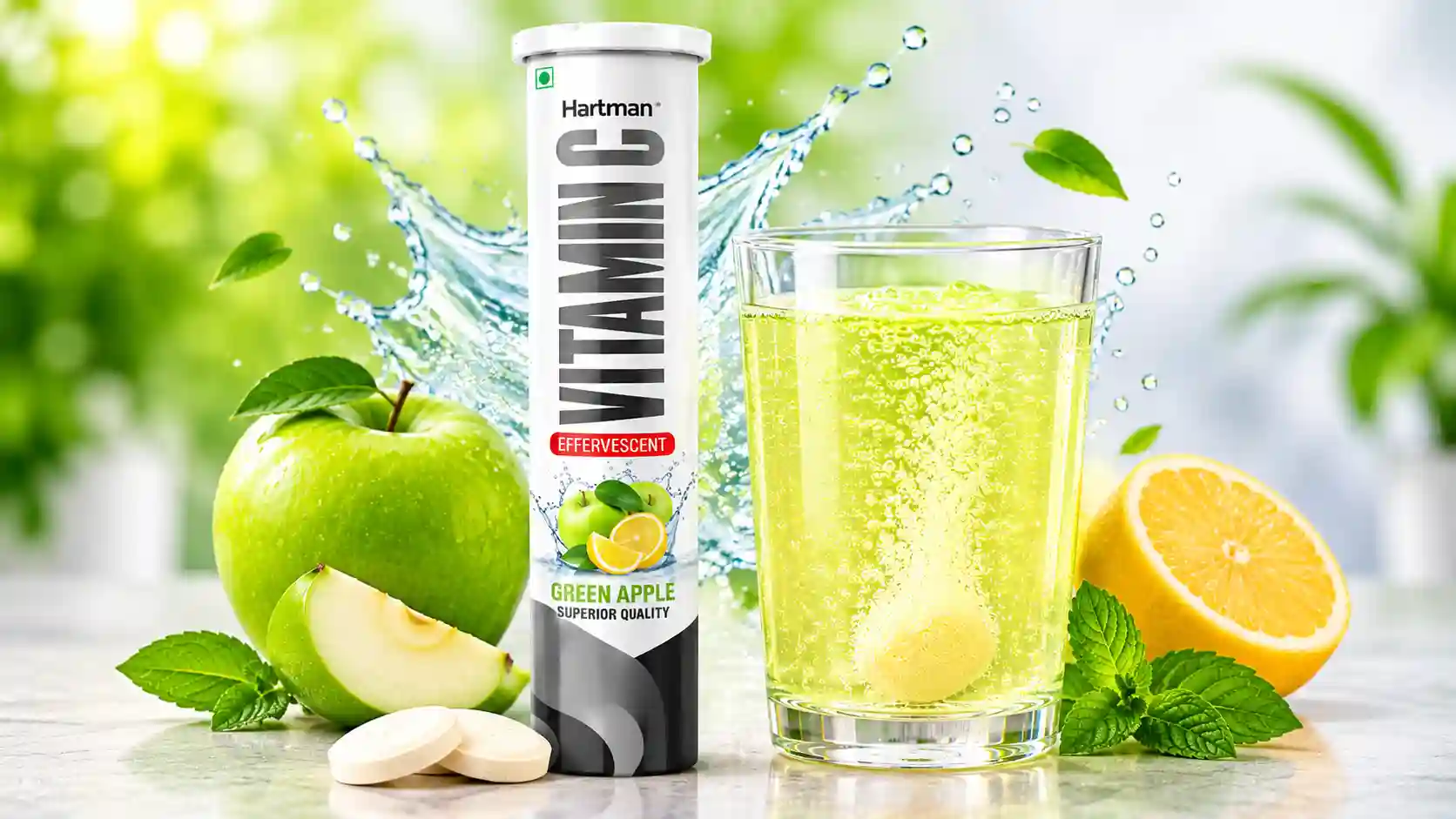
Effervescent tablets are a convenient method of taking vitamins, minerals and other supplements. Users drop it into water and let it fizz before drinking the concoction. This is a unique opportunity on the part of the brand to launch new supplement products, thereby, effervescent tablets are interesting for the brands.
The production of these tablets is not as simple as just mixing and pressing, however. The product must have a pleasant flavor, dissolve, and be moisture-proof during storage.
If you're a brand looking to introduce vitamin, multi-vitamin or hydration products, it's crucial to know about effervescent tablet manufacturing. It assists them in making sound choices on the ingredients, flavors, packaging, and production.
What Makes an Effervescent Tablet Different?
An effervescent tablet consists of a carbonate/bicarbonate and an acid. These ingredients react to water and produce bubbles, which aid the tablet's dissolving or dispersion.
These products are made up in water prior to consumption rather than taking a pill. This makes effervescent vitamin tablets an alternative to consumers who prefer taking supplements in the form of a drink.
Why Brands Choose the Format
- Provides another option to tablets and capsules.
- Supplies a simple method to get certain vitamins and minerals.
- Gives brands the opportunity for a variety of flavors.
- Packaged in a convenient, portable container.
- Can be designed for vitamin/hydration product categories.
But not all ingredients can be used in the format. Considerations for development include serving size, taste, stability, and customer preference.
Which Ingredients Are Suitable for Effervescent Tablet Manufacturing?
Consideration can be given to adding vitamins, minerals, flavors, and sweeteners to effervescent formulations. Examples include vitamin C and certain mineral salts.
An appropriate combination of vitamins can also be used to make multivitamin effervescent tablets. Each ingredient, however, needs to be tasted and tested for solubility, moisture sensitivity, and compatibility with the other ingredients.
| Ingredient Category | Main Formulation Questions |
|---|---|
| Vitamins | Will the ingredients remain stable during production and storage? |
| Electrolytes / Minerals | Will they affect taste, tablet size or solubility? |
| Botanical Ingredients | Will they dissolve or leave visible particles? |
| Sweeteners and Flavors | Will they provide an acceptable taste? |
Some ingredients can be broken down into a solution, and some can be left as small particles in the water. Brands need to determine what they want to see in the finished product and test the final product to see if it meets their expectations.
The Central Technical Challenge: Moisture
Being one of the most critical factors in effervescent tablet manufacturing, moisture is a concern. Components used for making fizz could react if exposed to undesirable moisture during the manufacturing or storage process.
This can result in soft tablets, tablet swelling, loss of tablet fizz or tablet sticking. The moisture control of the manufacturing process is therefore necessary when dealing with ingredients, formulation, tablet compression, and packing the finished product.
Questions Founders Should Ask
- What measures are taken in the production to control moisture?
- What ingredients require additional protection?
- Which pack material is going to be used?
- What will be used to transport tablets?
- Based on the proposed shelf life, what type of stability testing is used?
How Formulation Development Works for Effervescent Tablet Manufacturing
The first step in effervescent tablet formulation is to grasp the product concept of the brand. The development team determines if the ingredients requested can combine to a serving size and flavour.
Step 1 — Set the Product Brief
Provide the product category, ingredients, portion size, intended taste, and intended market and packaging needs. Determine the feasibility of ingredients and serving sizes.
Step 2 — Check Ingredient and Serving Feasibility
The team determines if ingredients selected will fit into the tablet. Large amounts of ingredients can cause the tablets to be larger or change the taste.
Step 3 — Balance the Effervescent System
The acid and carbonate components need to interact to produce the desired fizz, but without compromising the stability of the product.
Step 4 — Develop Flavor and Sweetness
Some mineral sources have a salty and bitter flavor. Flavorings and sweeteners help achieve balance in the formula and make the product better to drink.
Step 5 — Make and Evaluate Prototypes
The samples are tested on the basis of their appearance, potency, taste, carbonation, dissolution, and sedimentation. Some changes might need to be made before giving approval.
Step 6 — Lock Specifications and Plan Production
Upon prototype approval, information about ingredients, tablet weight, quality standards, and packaging specification is documented before commercial manufacturing.
Tablet Hardness Versus Dissolution: Finding the Balance
An effervescent tablet must have enough strength to withstand packing and transportation but be capable of releasing the effervescent agent in the water.
It may be too fragile, and break during handling. It may take longer to be dissolved if it is too dense or poorly formulated.
The strength of the tablet depends on the ingredients used to make the tablet, the formulation and the compression condition. The physical strength and performance in water should be determined before production is approved.
How to Develop an Electrolyte Effervescent Tablet
Electrolyte effervescent tablets may contain the minerals, such as sodium, potassium, magnesium, and other selected minerals.
However, various mineral salts can influence the sense of taste, tablet size, and the look of the drink created. Excessive amounts of minerals can also leave an unpleasant salty or bitter taste.
An Anonymized Illustrative Scenario
Think of a brand that is creating a sugar-free lemon-lime electrolyte tablet. The minerals chosen give a strong salty taste when tested.
The development team can consult appropriate mineral sources, sweetness and acidity for optimization of the final product.
This case is an example of how the choice of ingredients should coincide with the development of flavors.
Vitamin C Effervescent Tablets: What Changes?
There is nothing new about Vitamin C effervescent tablets as a product category. Nevertheless, there is still a need for careful consideration of the ingredient amounts, acidity, flavor, and storage conditions.
It is necessary that the formula is tasty and provides the required quality of the product. Brands must also consider stability testing and protection against packaging before approving shelf life of the product.
Choosing the Right Flavor During Effervescent Tablet Manufacturing
Flavor is crucial for customer experience. There can be several types of flavors considered, such as lemon, orange, berry or tropical.
When considering a certain flavor, brands should:
- Test it in the amount of water prescribed.
- Evaluate its sweetness and aftertaste.
- Consider foam formation, turbidity and sedimentation.
- Evaluate the flavor at realistic temperatures.
- Make sure the flavor complements all active ingredients.
Tubes, Sachets, and Other Packaging Choices
Effervescent tablet packaging must protect tablets from moisture and physical damage. Multi-tablet tubes and individually packed tablets are two options brands can consider.
| Packaging Choice | Questions to Resolve |
|---|---|
| Multi-tablet tube | Does the closure provide moisture protection? Is dispensing convenient? |
| Individually packed tablets | Are the seals reliable? Does the material protect each tablet? |
| Secondary carton | Does it protect the product during transport? Is there enough labeling space? |
The choice of packaging depends upon the type of commodity, amount, and storage conditions. Packaging should be selected based on its function rather than looks only.
Quality Testing and Stability
Quality testing assists in determining whether the final products meet the specified standards. Based on the product type, the tests can include:
- Identity and quantity of ingredients.
- Weight and appearance of tablet.
- Physical properties and integrity.
- Dissolution/dispersion characteristics.
- Microbiological properties when necessary.
The choice will depend on the item to be packaged, how many servings will be packed, and how well it must be protected. It must not be chosen based on appearance alone.
Effervescent Tablets Vs Powder Sachets
Both formats allow consumers to prepare a drink using water, but their production requirements differ.
| Decision Factor | Effervescent Tablets | Powder Sachets |
|---|---|---|
| Consumer Ritual | Drop tablet into water and wait for dispersion | Empty powder into water and mix |
| High Ingredient Loads | Can be limited by tablet size | More flexible for larger servings |
| Moisture Sensitivity | Requires careful protection | Depends on ingredients |
| Flavor Flexibility | Must work with the effervescent system | Depends on the blend |
| Manufacturing | Requires tableting and moisture controls | Requires blending and filling controls |
Tablets may suit compact supplement products, while powder sachets may be more practical for larger servings.
What Drives Manufacturing Cost in Effervescent Tablet Manufacturing?
The order quantity is only one of the factors that contribute to the cost of effervescent tablet production.
Some of the more critical costs are
- Nature and amount of raw materials.
- Formulation and flavor development.
- Weight and size of tablets.
- Schedule and moisture management for production.
- Printing and packaging materials.
- Quality testing & documentation.
When asking for a quote, brands must provide all the specifications of their products. This helps the manufacturer to understand the project prior to cost estimates.
Planning for the USA, UK, EU, or Australia?
Brands should verify the regulations of their target country before settling on ingredients and labelling before going international.
- USA: Dietary Supplement Recommendations need to be revised.
- UK: Food supplement and labelling needs to be reviewed.
- EU: Consideration should be given to the rules for food supplements and ingredients.
- Australia: Requirements for food or therapeutic goods may depend on the classification of the product.
The production of a product in India does not ensure it will be marketable in all countries. You need regulatory guidance relevant to the market.
What to Ask a Prospective Manufacturer of Effervescent Tablets?
For any supplement brand, you must carefully select the effervescent tablet manufacturer.
When selecting a partner, you should ask yourself:
- Would the selected components work well in this form?
- How would taste and dissolution testing be done?
- What would be the moisture protection?
- Which packaging options would be available?
- What kind of documentation on stability could be provided?
- What would be the necessary approvals before manufacturing?
Comparison of various effervescent tablet manufacturers regarding product development, technical support, and their capability to satisfy your needs is another efficient way.
How Hartman Supports Effervescent Projects
Hartman offers product concept evaluation, formulation development, and manufacturing support for appropriate effervescent tablet projects for supplement brands.
In partnership with specific manufacturing partners, Hartman can assist in the assessment of ingredients, flavors, packaging, and commercial needs.
The first step in private label effervescent tablets is to have a product concept, ingredient profile, preferred flavor, target market, and expected demand.
Hartman can help in determining the requirements for your proposed project, whether you are planning a vitamin or multi-vitamin product, or a hydration product. Brands can talk to the team about their product concept and development requirements with the effervescent tablet manufacturer.
Conclusion
The effervescent tablet manufacturing demands the appropriate degree of ingredients, taste, tablet strength, and moisture protection. It is important that brands be aware of these factors before making the jump to commercial production.
Looking to develop a vitamin C, multivitamin, or electrolyte supplement? Contact Hartman to discuss your product idea, formulation, and packaging requirements.


